
Policy Debt: The Missing Massive
Strong Towns says "yes" to big buildings near transit stations. However, it's a debt coming due, not a victory.
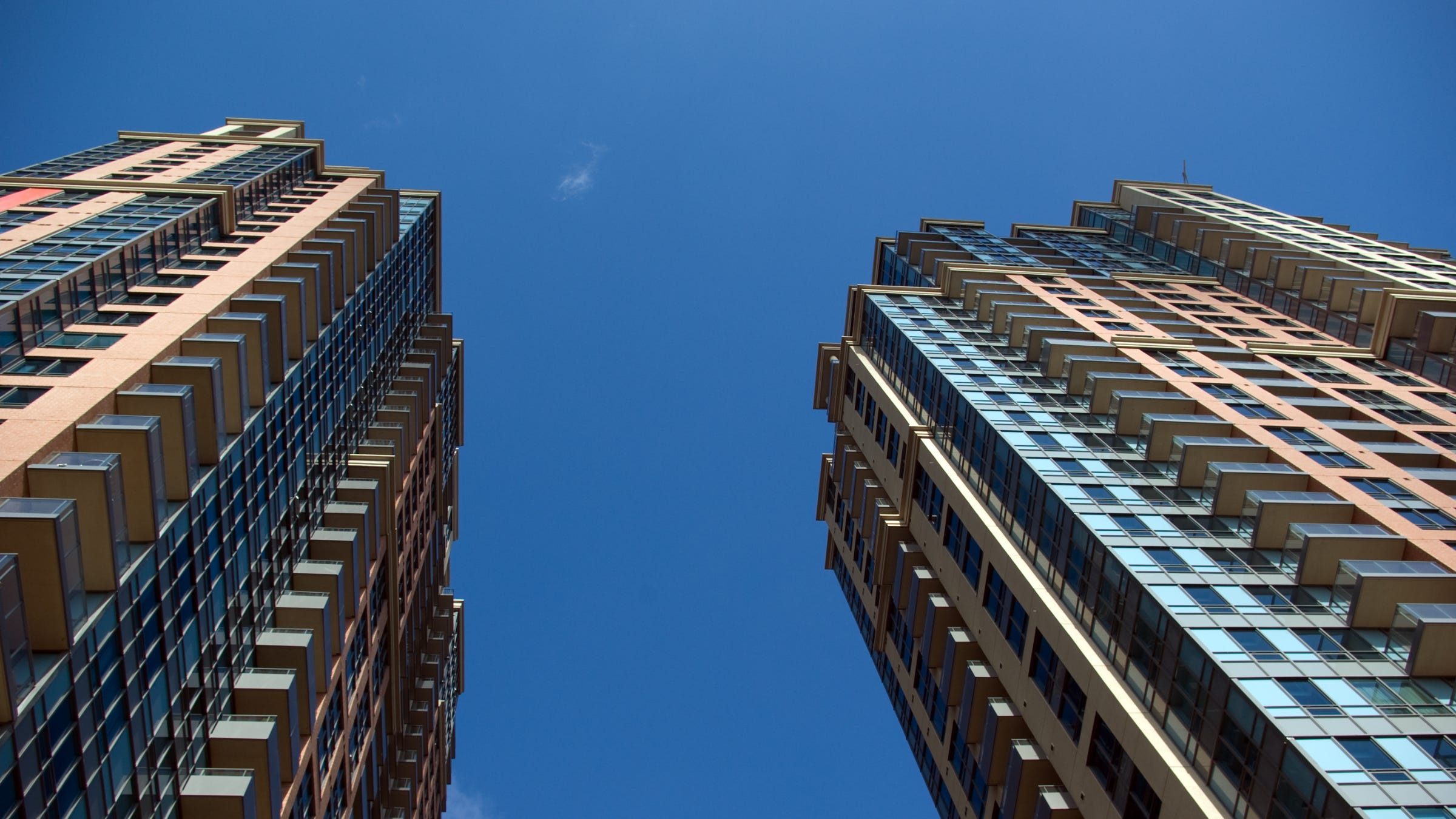
Q: Strong Towns defaults to incremental housing development in all neighborhoods — you call it neighborhood maturation — but what do we do near transit stops, especially in major cities with high housing demand? Is there any room for immediate jumps to large-scale developments (i.e., “missing massive” housing) in a Strong Towns approach?
A: Yes. But not for the reason most people think.
This question gets at what seems like a contradiction in the Strong Towns approach. We’ve spent years arguing that all neighborhoods should evolve incrementally: a house becomes a duplex, a duplex becomes a fourplex, a corner store adds apartments above it. Healthy places mature one increment at a time. So what do we make of a subway station surrounded by proposals for 40-story apartment towers? Has Strong Towns simply been wrong about how growth should happen? Or does the logic of incremental development break down in places with extraordinary transit investments and extraordinary housing demand?
I don’t think either is true. In fact, I think the opposite is true. Those towers are usually the visible symptom of a much deeper policy failure. By the time someone proposes a 40-story building, the important decisions have already been made. Most of them were made decades earlier.
Incremental growth and missing massive aren’t competing visions for how a city should grow. One is what a healthy ecosystem does: it keeps adapting, keeps maturing, is never finished, and just becomes an older and more complex version of itself with each passing year. The other is the radical distortion that happens when a place is supercharged for change, yet keeps suppressing it.
Finding Its Level
Strong Towns uses the phrase “incremental growth” to describe the way healthy neighborhoods mature over time. The important thing isn’t the size of the next project. It’s that each project is the next step in development intensity for that neighborhood, one the place can absorb while building on (not mining or destroying) the accumulated wealth, relationships, and character already there.
This is all driven by land values. In a healthy neighborhood, land — literally, the ground the place has been built upon — gradually becomes more valuable as more people choose to live, work and invest there. Buildings, meanwhile, age and slowly lose value. Eventually, they become more of a liability than an asset as maintenance and replacement costs grow.
When things are working and the neighborhood is improving, the land beneath a building rises, eventually becoming valuable enough that replacing a distressed building with something slightly more intense simply makes economic sense. That new investment makes the neighborhood more valuable still, raising land values just enough to invite the next round of redevelopment. It’s like rising water gradually finding a new level instead of experiencing a flash flood.
This isn’t simply a matter of good taste in urban design. Incremental adaptation is how a place absorbs stress and responds to opportunity, without being overwhelmed by either. A neighborhood that is not allowed to change, or is only allowed to change in large, discrete leaps in intensity, has to wait, sometimes for decades, to respond to pressure. A neighborhood that keeps changing a step at a time is always adjusting, always testing whether the next phase makes sense. In doing so, it stays strong and capable of responding to whatever comes next.
That’s why Strong Towns has consistently argued that cities should make it easy for neighborhoods to continually mature, one increment at a time. It’s not because we have a dogmatic preference for the incremental or a negative emotional reaction to bulk. It’s because continuous adaptation is how places absorb pressure — economic, cultural, physical — from dozens of directions at once before any one of them becomes acute.
Missing massive looks, at first glance, like the opposite of that idea. It looks like a neighborhood of single-family homes transforming into a neighborhood of 40-story towers, a leap that skips over generations of maturing. But that’s not the right way to understand what’s happening in those places, and the difference becomes clear once you stop looking at the tower and start looking at what happened to the land beneath it decades before anyone proposed building one.
A Few Stops From the Capitol
A couple years ago, I was giving some lectures in Washington, D.C.
Early in the day, I’d been in conversation with housing advocates who argued that the District of Columbia needed to relax its zoning rules and allow much taller buildings (what they were calling the missing massive) in the urban core, to meet housing demand. I wasn’t seeing it. Development in that part of the city was already fairly intense and not easily redevelopable, but their argument was that historic preservation rules had suppressed the kind of towers you’d find in other major cities.
To get to the library where I was speaking next, I rode the Metro a couple of stops from where that initial conversation had taken place. It was only a few minutes away. When I stepped off the train, I found myself surrounded by single-story strip malls, surface parking lots, and, just beyond them, single-family homes.
There, on that ground, was the robust case for the missing massive.
The District of Columbia has spent billions of dollars building one of the finest transit systems in North America. It placed a station mere minutes from one of the most economically productive places on Earth. And, as a result, the land surrounding that station ended up worth vastly more than it had ever been in the days when people got there on foot, by carriage, or by car.
A subway investment of this magnitude arrives all at once, and the value of the land beneath the neighborhood jumps to reflect it. The strip mall, the parking lot, the single-family homes: none of them were built for what the land underneath them was suddenly worth. They were built for what it used to be worth. Yet, the neighborhood itself doesn’t automatically move with the land value, at least not right away.
If this had played out naturally, the neighborhood would have redeveloped over time to match what the land underneath it was suddenly worth. That means a lot more units — a LOT more units — and it should have happened decades ago.
This would also have meant dislocation. The people who lived there before the Metro stop was built would have felt pressure to move, and almost certainly, that would have meant gentrification. Once the Metro stop sent land values shooting upward, the demographic makeup of the neighborhood was primed to change just as dramatically.
Only, it didn’t.
Locked in Place
It is easy to blame zoning. It is easy to blame the neighbors who show up at every hearing to oppose anything larger than what’s already there. It is easy to point at historic preservation boards, or at a city council unwilling to spend political capital on a fight for affordable housing. These are easy because each of those explanations gets at part of the problem. Although, none of them gets at the underlying initial cause of the tension.
The day the Metro started running, the land underneath this neighborhood became worth many times what it had been — many times what the existing buildings justify — and that dramatic imbalance creates instability that will continue until it is resolved.
That imbalance could have been addressed right away, which is what would have happened if we were serious about what we are doing with major transit investments. The simplest way that happens is if the cost of the transportation investment gets passed back onto the landowners who benefited from it. This is done using a special assessment, a commonly used tool of local government.
Passing on some of the cost of constructing the Metro to the property owners whose land values soared as a result doesn’t just help pay for the system. It aligns the incentive with the outcome. By raising the cost of simply holding onto an old building on newly expensive land, a special assessment would have created the conditions for rapid redevelopment of the neighborhood around the station. This is what serious transit agencies around the world do, such as Hong Kong’s MTR, which pays for a good share of its own construction this way.
But that isn’t what happened in Washington. The cost of the Metro system wasn’t passed on to the landowners who gained the most from it. It was absorbed, by taxpayers and by the people riding the trains every day. Public policy, in effect, handed a windfall to whoever happened to own land near a station, no strings attached.
Even without that push, some redevelopment should have followed anyway, just on a slower timeline. Landowners don’t hold property forever. They die. They divorce. They get tired of collecting strip-mall rent on land worth 10 times what the strip mall earns. In a normal market, each one of those exits is a chance for the land to sell to someone willing to pay a price that reflects what it’s actually worth now, and to build something that can justify having paid it.
This is where zoning ratchets up the tension. Local codes kept the neighborhood frozen at an intensity that made sense before the station existed. What followed was a layer of unresolved pressure, one that still exists. Land near the station commands a high price, because everyone agrees it is worth a lot. The tax base stagnated anyway, because zoning wouldn’t let anyone build enough to collect on that value.
This invites speculation (another source of neighborhood tension) because enough people understand that, if you assembled enough parcels and waited long enough, the regulations would eventually have to give way to the pressure. Whoever was still holding the land when it did would collect a windfall of their own.
The NIMBYs who feel anxiety over this pressure are not wrong. They are living on a fault line of policy instability, and the next tremor could unleash the big one. Their actions may be unhelpful, but their fear is not misplaced. The speculators are also not wrong that public investments in transit have created a massive financial gap that needs to be resolved. Anyone who can get in at a good price and hang on long enough will profit handsomely, the echo of the windfall taxpayers bestowed on this neighborhood decades ago.
What a mess.
One Way Out
There is only one way out of this mess — one way to release the pressure and attain neighborhood stability — and that is to build the missing massive. Not because a 40-story tower is a triumph, but because it is the only thing left that can absorb decades of deferred pressure and bring the market back into some kind of equilibrium.
That’s not a victory lap. It’s a debt coming due.
We have a saying at Strong Towns: if you want transit, build a neighborhood. Build a place that can carry the weight of the investment made in it. That’s an unpopular thing to say to people who think about transit in a single dimension. They want the train. I understand the impulse: trains are genuinely wonderful, and the neighborhoods a good transit line can produce are some of the best places in the world. But a transit investment only becomes a wealth accelerator if the neighborhood around it is allowed to accelerate with it. The scale of the wealth created is inherent to the scale of the investment, whether anyone plans for it or not.
I’ve watched transit advocates make the case for enormous public investments, in part to help lower-income riders get where they need to go, and then wring their hands over the gentrification those same investments set in motion. That’s not a contradiction reality forced on them. It’s a contradiction they walked into by treating the transit line as the whole project instead of the last half of it.
I see the same gap here in Minnesota, where we keep building light rail extensions to handle commuter traffic. At nearly every stop, there’s a slide in someone’s plan gesturing at “future redevelopment potential.” What there isn’t, usually, is any mechanism to make that redevelopment happen: no cost-sharing, no financial pressure, nothing that would move a landowner off a strip mall and onto a building that matches what the public investment just made their land worth.
Where redevelopment does happen, it’s typically because a public subsidy induced it, which means we pay to build the transit line, and then we pay again to get the housing. We should be getting both, in great abundance, at essentially no financial cost to the public. That we’re not is a tremendous public policy failure, one that will never be resolved by one department working on transportation and a separate department working on housing.
The missing massive isn’t the reward for a good transit investment. It’s the bill for a policy failure that started the day the public investment was made, an invoice that kept compounding, one skipped decade at a time, until only a very large building could pay it off.
What’s your take on missing massive housing? Share your thoughts with me and other Strong Towns members in the Commons, where we’ll be discussing this article.
I agree with what you are saying, Chuck. But, what we are witnessing, at least here in Utah, is an explosion of many of these emergent massive policy failures and there is no proof, that when the maintenance bills arrive, that these new land-use developments at these transit stops will generate the revenue to pay the bill. In fact, many of these places are enjoying from financial incentives like TIFs, which raises the question; is this not a new version of the suburban experiment, all dressed up as grown-up urbanism?
Are we are fixing 'the look' but the machinery that creates is still top-to-bottom? Isn't this process still some 'Wizard of Oz' type of stakeholder hiding behind a policy curtain, concocting a new massive policy debt to pay for an old massive policy debt; while the taxpayers' increasingly empty pockets continue to be held as collateral?
Is feeling nervous about them a rational response?
Great post and a scenario--no dev in neighborhoods, pressure builds up, high rises pop up, neighborhood vibe gone--I've seen played out in too many American cities.
Another thing that would help is, especially in downtowns, tax buildings based on location instead of use. This would end developers sitting on vacant buildings for decades while they wait for others to take the financial risk and turn the area around, and then they cash in on higher property values having done nothing to contribute. This would be one step to rejuvenating a lot of mid-list downtowns.
Frustrating to see obvious solutions that are almost never implemented--